

10 Things That Your Family Teach You About Gutter Downspouts
페이지 정보

본문
Understanding Gutter Downspouts: A Comprehensive Guide
When it pertains to home maintenance, gutter systems are frequently overlooked, yet they play a crucial role in protecting a home from water damage. One of the key parts of a gutter system is the downspout. This article will explore what downspouts are, their functions, types, installation factors to consider, maintenance, and more, including tables for clarity and a comprehensive FAQ area to address common questions.
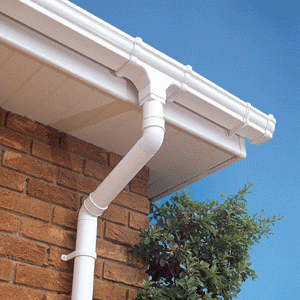
What Are Gutter Downspouts?
Gutter downspouts are vertical pipes that direct rainwater from the roof gutters down to the ground or drainage systems. Their main function is to direct water far from the foundation of the home, preventing flooding and erosion.
Table 1: Functions of Gutter Downspouts
| Function | Description |
|---|---|
| Water Diversion | Directs rainwater circulation far from the structure structure |
| Disintegration Control | Prevents soil erosion around the boundary of the home |
| Foundation Protection | Prevents water build-up that can damage the structure |
| Wetness Control | Helps to control moisture levels in basements and crawl areas |
Kinds Of Gutter Downspouts
There are numerous types of downspouts readily available, each with its own benefits and drawbacks. Below is a breakdown of the most typical types.
Table 2: Types of Gutter Downspouts
| Type | Product | Pros | Cons |
|---|---|---|---|
| Rectangle-shaped | Aluminum/Steel | Easy installation, flexible | Can damage or rust with time |
| Round | PVC/Aluminum | Resilient, Local Guttering Contractors (https://guttermaintenance92457.levitra-wiki.Com/2092761/the_biggest_problem_with_gutter_maintenance_and_how_you_can_resolve_it) low maintenance | May not blend well with some home designs |
| Square | Copper | Visual appeal, long-lasting | Greater expense, complicated installation |
| Customized | Various | Tailored to particular requirements | Potentially costly |
Key Considerations for Installation
When setting up gutter downspouts, a number of factors need to be considered to make sure optimal performance and longevity.
1. Location and Layout
- Positioning: Position downspouts at corners and locations where water tends to collect.
- Distance: Downspouts must be positioned at least 5-10 feet far from the foundation to avoid pooling.
2. Size and Capacity
- Sizing: Downspouts ought to be properly sized to deal with the volume of water from the Residential Gutters. A basic general rule is that a 2x3 inch downspout can handle roughly 600 square feet of roof area.
3. Product Choice
- Select a product that matches the home's outside and is resistant to rust and wear.
4. Drainage Solutions
- Think about including extensions or splash obstructs at the base of downspouts to direct water even more far from the structure.
Table 3: Downspout Sizing Guidelines
| Roof Area (sq. ft.) | Downspout Size (inches) |
|---|---|
| Up to 600 | 2 x 3 |
| 600 - 1200 | 3 x 4 |
| 1200 - 2400 | 4 x 5 |
Maintenance Tips for Gutter Downspouts
Regular maintenance is vital for the performance of downspouts. Here are some essential maintenance pointers:
1. Regular Cleaning
- Clear debris like leaves, dirt, and branches from downspouts to make sure unobstructed circulation.
2. Look for Blockages
- Examine downspouts occasionally for blockages, especially after heavy rains.
3. Examine for Damage
- Try to find indications of rust, deterioration, or physical damage. Repair or replace broken areas promptly.
4. Make Sure Proper Alignment
- Guarantee that downspouts are properly lined up to guide water efficiently.
5. Winter season Preparation
- In areas with freezing temperature levels, guarantee downspouts are clear to avoid ice dams, which can trigger clogs.
Typical FAQs About Gutter Downspouts
1. How often should I clean my downspouts?
- It is suggested to clean them a minimum of two times a year: once in spring and when in fall. More frequent cleaning may be essential in areas with numerous trees.
2. What takes place if downspouts are clogged?
- Clogged Gutters downspouts can result in overflow, triggering water damage to the roof, walls, and foundation.
3. Can I set up downspouts myself?
- Yes, with the right tools and understanding, DIY installation is possible. However, employing a professional makes sure proper installation.
4. Do downspouts require to be insulated?
- Insulating downspouts can be useful in chillier environments to prevent freezing, particularly if they cause interior drainage systems.
5. Exist alternatives to conventional downspouts?
- Yes, rain chains and decorative downspouts can act as visual options while still rerouting water successfully.
Gutter downspouts are important elements of a home's drainage system, making sure that rainwater is efficiently directed far from the foundation to avoid water damage. Regular maintenance and appropriate installation can improve their functionality and durability. By comprehending the types, functions, and maintenance needs of downspouts, house owners can take proactive steps in safeguarding their homes versus water-related problems. Whether carrying out DIY installations or Top Guttering looking for professional support, prioritizing downspout care will constantly yield a well-protected home.
- 이전글The 10 Most Scariest Things About Porch Construction 26.03.09
- 다음글The 10 Scariest Things About Can You See A Psychiatrist Privately 26.03.09
댓글목록
등록된 댓글이 없습니다.